
Gum Disease Treatment – Springdale, AR
Treat Gum Disease and Preserve Your Smile

Would you be surprised to learn that sources estimate nearly half of U.S. American adults have some form of gum disease? Although the earliest stage, gingivitis, might not seem serious, it’s important to address it sooner rather than later to avoid progressively worsening periodontal problems.
Fortunately, Dr. Bollin offers several services to treat gum disease and preserve your smile. Continue reading to learn more about the options, and please contact us with any additional questions or to schedule an appointment.
Why Choose Sunset Avenue Dental for Gum Disease Treatment?
- · State-of-the-Art Soft-Tissue Laser Therapy Offered
- · Fellow of the Academy of General Dentistry
- · Nitrous Oxide Dental Sedation Available
What is Gum Disease?
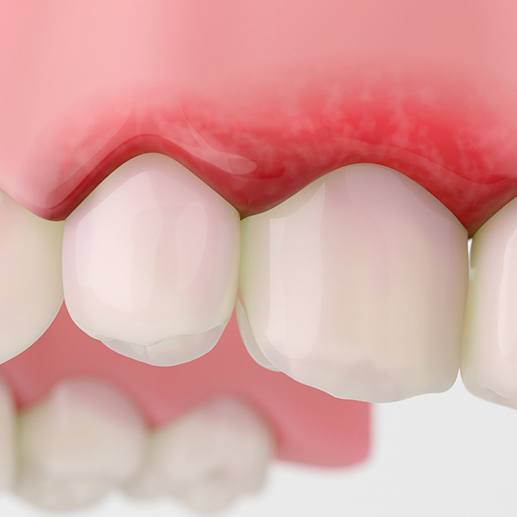
This condition occurs when bacteria in your mouth form plaque along your gumline and penetrate the tissues, triggering an infection. There are two main stages of the disease, outlined in more detail below:
- Gingivitis. This is the earliest stage and can often be reversed by flossing more consistently twice daily at home and visiting our team every 6 months for a routine exam and cleaning.
- Periodontitis. This more advanced form can often be managed but not completely cured, and can cause the gums to recede, which can result in permanent tooth loss.
Symptoms of Gum Disease

You may be more likely to develop a problem if you neglect routine dental hygiene, smoke cigarettes or use tobacco products, take certain prescription medications, or have different genetic, immune-compromising, or other medical conditions that increase the risk. Regardless of the reason it developed, knowing what gum disease looks like can help you understand when to contact our team for an appointment.
Some indicators of gingivitis can include:
- Halitosis, or chronic bad breath
- Bleeding when brushing or flossing
- Red/inflamed gums
- Tenderness in the tissues
- Early signs of gum recession
Periodontitis can present with the following symptoms:
- Pain when biting or chewing
- Increased sensitivity
- Loose teeth
- Bite changes
- More advanced recession
- Tooth loss
How Do We Treat Gum Disease?

After our team updates your medical history, Dr. Bollin will thoroughly examine your teeth and gums to determine the severity of your condition and devise a customized treatment plan based on his findings. We offer several services that can be provided individually or combined to halt the disease and help your connective tissues recover. Our team will walk you through the details of the proposed services for your approval before proceeding.
Scaling & Root Planing
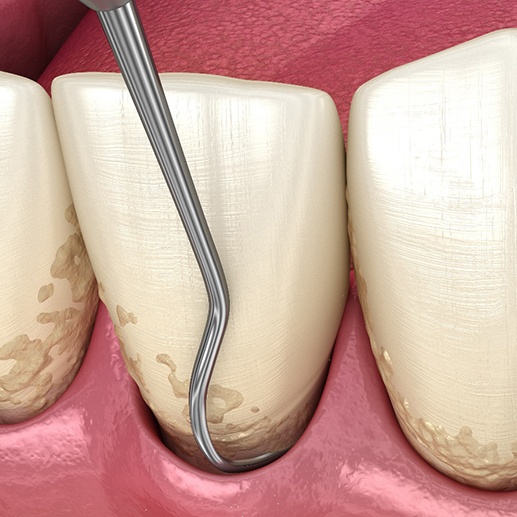
Scaling and root planing can also be called a “deep dental cleaning.” During this service, we carefully remove bacteria-filled biofilm from your teeth and along the gumline. This allow your gums to heal and gives the opportunity to firmly reattach to your teeth. Scaling and root planing is a first-line treatment for many cases of mild to moderate gum disease.
Do I Need Scaling & Root Planing?

Some minor cases of gum disease can be reversed via regular dental cleanings and diligent at-home care. Our team can coach you on oral hygiene techniques that may improve your condition. In some cases, though, more intensive intervention is needed.
You should visit us for a gum health evaluation if:
- Your gums bleed easily when you brush and floss.
- You have persistent bad breath.
- Your gums have started to recede.
- Your gums are puffy, red, and tender.
The Process of Scaling & Root Planing

Scaling and root planing involves two stages:
- During scaling, we use special instruments to remove plaque from above the gumline and from the pockets between your teeth and gums.
- During root planing, we smooth out the tooth roots so bacteria can no longer easily cling to them.
We usually treat just one quadrant of the mouth at a time with scaling and root planing, so the whole process might require up to four appointments. We will numb your mouth during each session to keep you as comfortable as possible.
Aftercare Tips for Scaling & Root Planing

It might take a few weeks for your mouth to feel normal after scaling and root planing. You can support your body’s recovery by taking these steps:
- Periodically rinse your mouth with warm salt water.
- Take any medications as directed by our team.
- Eat a soft diet that is not too spicy, hot, or acidic.
- Maintain thorough oral hygiene, but be gentle around the treatment area.
- Do not smoke or use any tobacco products.
- Call our team if you run into any questions or concerns.
Antibiotic Treatment
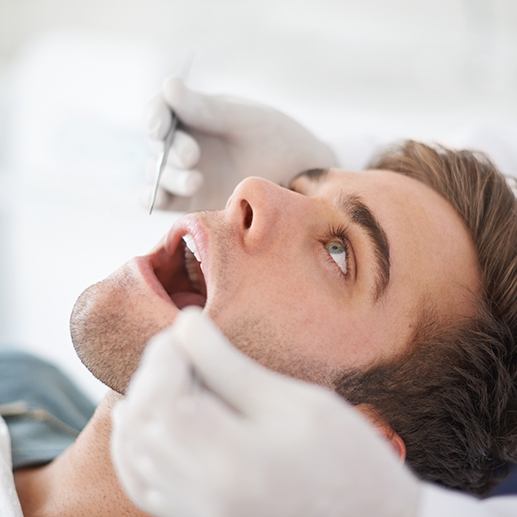
We also offer Arestin, an antibiotic, which is administered directly into the pockets of your gums. This method allows the medication to gradually release into the tissues, helping fight bacteria over the next few weeks. In some cases, antibiotics alone can help address gum disease, but they are usually prescribed after a deep cleaning, such as scaling and root planning, to help your mouth heal and prevent a recurrence.
Laser Periodontal Treatment
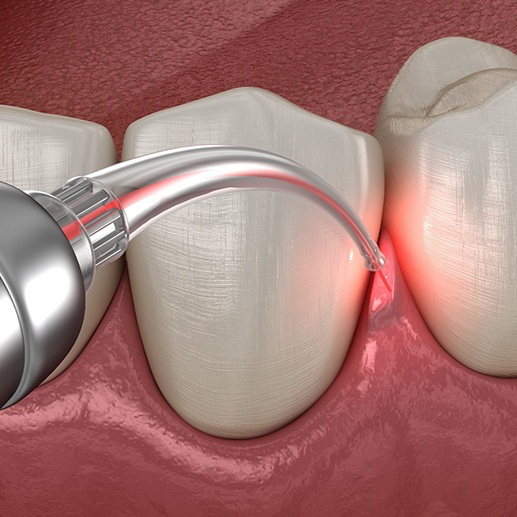
Dr. Bollin is certified to offer advanced soft-tissue laser therapy to help treat gum disease and other oral concerns. This state-of-the-art technology allows him to remove damaged materials more gently and accurately. It cauterizes the tissues immediately, helping reduce potential discomfort or bleeding while speeding up recovery times.
Gum Disease Treatment FAQs
How common is gum disease?
Unfortunately, gum disease is extremely common here in the United States. In fact, the CDC estimates that four in 10 adults over the age of 30 have some form of the infection.
Periodontitis, the more advanced form of gum disease, is more common with age, affecting approximately 60% of adults aged 65 or older.
Men are more likely to develop gum disease than women. The CDC estimates one in three women will develop the condition, while half of all men will.
It doesn’t help matters that many of the risk factors for gum disease are also very common health concerns in the United States, including diabetes, smoking, poor oral hygiene, and poor nutrition.
Does gum disease ever go away?
If caught early enough, gingivitis is reversible, making visiting your dentist every six months for your preventive checkups and cleaning even more important! However, once it has advanced to periodontitis, gum disease can cause bone, tooth, and gum loss. At this point, it is considered untreatable, because the oral structure will not grow back. Thus, gum disease treatment in Springdale focuses on managing the negative effects on your smile.
Additionally, if you’re genetically predisposed to gum disease, you might need more frequent dental visits to properly manage your oral health.
Is gum disease a dental emergency?
Yes, gum disease is considered a dental emergency, even in its early stages. Unfortunately, if you wait too long to contact your emergency dentist to receive gum disease treatment in Springdale, your condition could worsen and become more difficult to treat, putting you at risk of lasting damage.
I have heard there is a connection between gum disease and other diseases. Is that true?
Yes. Recent studies have shown that gum disease could lead to an increased risk of many dangerous medical conditions like diabetes, heart disease, stroke, heart attack, and Alzheimer’s disease, just to name a few.
The research suspects that inflammation caused by the same bacteria responsible for gum disease can travel through your bloodstream and damage other areas of the body when left untreated.
Gum disease treatment in Springdale is not only extremely important in maintaining a full and healthy smile, but it also can reduce many overall health risks, too.